Psychedelic Therapy in Boulder, Colorado
Legal psilocybin work is available in Boulder, and it is available through a system the state built deliberately, with licensed facilitators, licensed healing centers, and rules about how the day is supposed to go. My name is Jeremy Nickel, I hold Colorado Natural Medicine Facilitator License #54, and I do this work here.
What I offer is a relationship that runs across three phases rather than a single appointment. We prepare together first, in conversations that cover your history, your medications, your fear, and what you are actually hoping might shift. Then there is a medicine day at a licensed healing center, six to eight hours long. Then we meet again afterward, more than once, because the session opens something and integration is where that opening either becomes part of your life or fades into an interesting memory.
The part I would want you to know first, if you were reading only one paragraph, is that I stay. I am in the room for the entire medicine day, awake and nearby, for all six or eight hours of it. I spent about twenty years as a chaplain before this, much of it sitting with people in hospital rooms during hours they could not have gotten through alone, and that turns out to be most of what this job actually requires.
What people mean when they search for psychedelic therapy here
Almost everyone who writes to me uses some version of the phrase psychedelic therapy, and I have no quarrel with it. It describes the shape of the thing accurately enough. My regulated role has a narrower name, though, and the difference is worth understanding before you spend money. Colorado licenses natural medicine facilitators, not psychedelic therapists. I prepare you, I supervise a psilocybin administration session at a licensed healing center, and I work with you afterward on integration. I am not a physician and cannot manage your medications, and I am not a psychotherapist and do not provide ongoing psychotherapy. Plenty of the people I work with have a therapist already, and the work usually goes better when the two of us are aware of each other.
It also helps to know what this is not, because several different things get described with similar language. Ketamine clinics operate under a completely different medical framework and are not part of Colorado's natural medicine system. Underground psilocybin sessions have existed for decades and are still illegal, with no licensing, no oversight, and no recourse if the person sitting with you turns out to be careless. And buying mushrooms remains illegal in Colorado even now, because what the Natural Medicine Health Act legalized is a supervised session rather than a purchase. You cannot pick up a dose here and take it home, which surprises people often enough that I bring it up early.
If you want the research and the mechanism rather than the legal structure, the science page goes through what the clinical trials actually found and where the evidence is still thin. And if you want the other half of that honesty, what this work does not do is the page I would read before booking anything with anyone.
What working together actually looks like
Preparation
Two conversations before anything else
The standard journey includes two one-hour preparation sessions, and they happen well before the medicine day. We go through screening, your medical and medication history, what brought you here, and what you are afraid might happen. We also talk about the possibility that the day gets hard, because it sometimes does, and I would rather you have already imagined that with me than meet it cold. By the time you lie down, I am not a stranger and you are not guessing about what the room will be like.
The medicine day
Six to eight hours at a licensed healing center
You arrive in the morning, we settle, and then most of the day happens lying down with eyeshades and music while I sit nearby. Much of my job is restraint. I am not there to guide you through content or to explain your own experience back to you while you are inside it. I am there so that whatever arrives has a witness, and so that nothing about the practical world requires your attention for those hours. I do not leave the room.
Integration
The part people skip and later regret skipping
Two more one-hour sessions come after, and they are where the day gets translated into how you actually live. Insight has a short shelf life on its own. What matters is the ordinary work of deciding what changes, what you stop doing, what conversation you finally have. This is why I do not sell a single medicine day as a product, and why integration is built into every offering rather than sitting on a menu of extras.
The complete structure, including couples work, retreats, and the cost of additional sessions, is laid out on the offerings page.
Where the medicine day happens
Front Range Psychedelic Therapy is my facilitation practice. It is not a healing center, I do not own a building in Boulder, and I want to be plain about that because the distinction matters under Colorado's system. Administration sessions are required to take place at licensed healing centers, and I work with licensed partner centers in Boulder, Denver, and Golden. We choose one together during preparation, based on which room suits you, what timing is available, and where you will be staying.
If Boulder is where you want to do this, we can hold the medicine day at an appropriate licensed center here. Preparation and integration sessions do not have to happen at the center, and often do not. They can happen remotely, which is what most out-of-state clients do, or in person when you are in town.
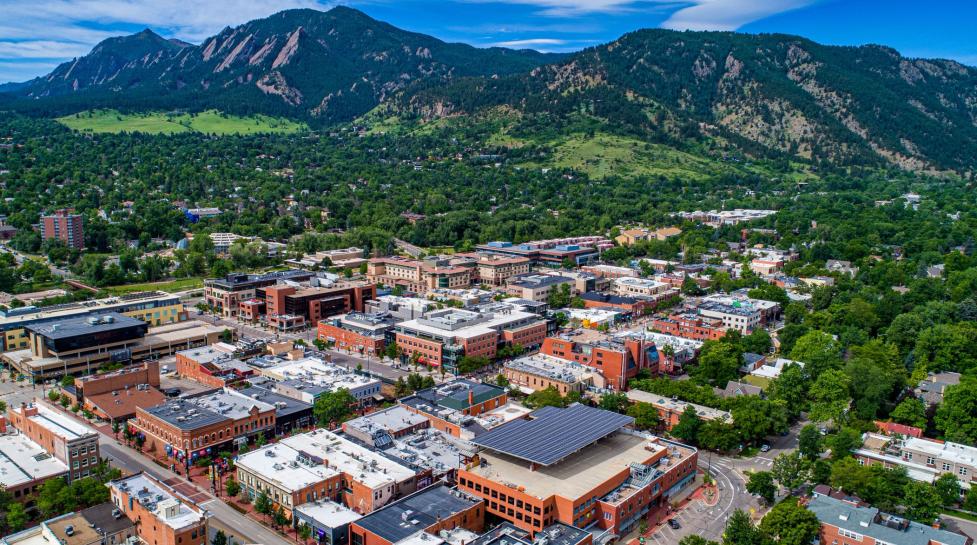
Why people choose Boulder for this
The honest answer is mostly logistical rather than scenic. After a medicine day you cannot drive, and you will not particularly want to talk to anyone or make decisions. Boulder is small and walkable in a way that solves this. It is usually possible to stay close enough to the healing center that the entire day happens on foot, which means no car, no ride to coordinate at the exact moment you are least able to coordinate anything, and no forty-minute drive back through traffic while the last of the medicine is still with you.
The morning after also matters more than people expect, and Boulder is good at that morning. Boulder Creek runs right through town with a path along it, and walking beside moving water for an hour is a reasonable description of what a lot of people want the next day. Chautauqua sits at the base of the Flatirons with gentle trails at the bottom for anyone who does not want a real hike. None of this is required, and I am not suggesting the landscape does the work. But having somewhere quiet and unhurried to be, in a town where nobody knows you and nothing is asking anything of you, is a meaningful part of why doing this away from your normal routines often goes better than doing it at home.
There is also altitude, which is real and mostly manageable. Boulder sits above five thousand feet, and if you are flying in from sea level you will feel it for a day or two, mainly as dehydration and worse sleep. This is one of several reasons I ask people to arrive with a day of margin rather than landing the night before.
For the full logistics, including lodging, flights, how many days to hold, and how Boulder compares to Denver and Golden, I wrote a complete guide to traveling to Colorado for legal psilocybin therapy so that none of it has to be guesswork.
Who will be sitting with you
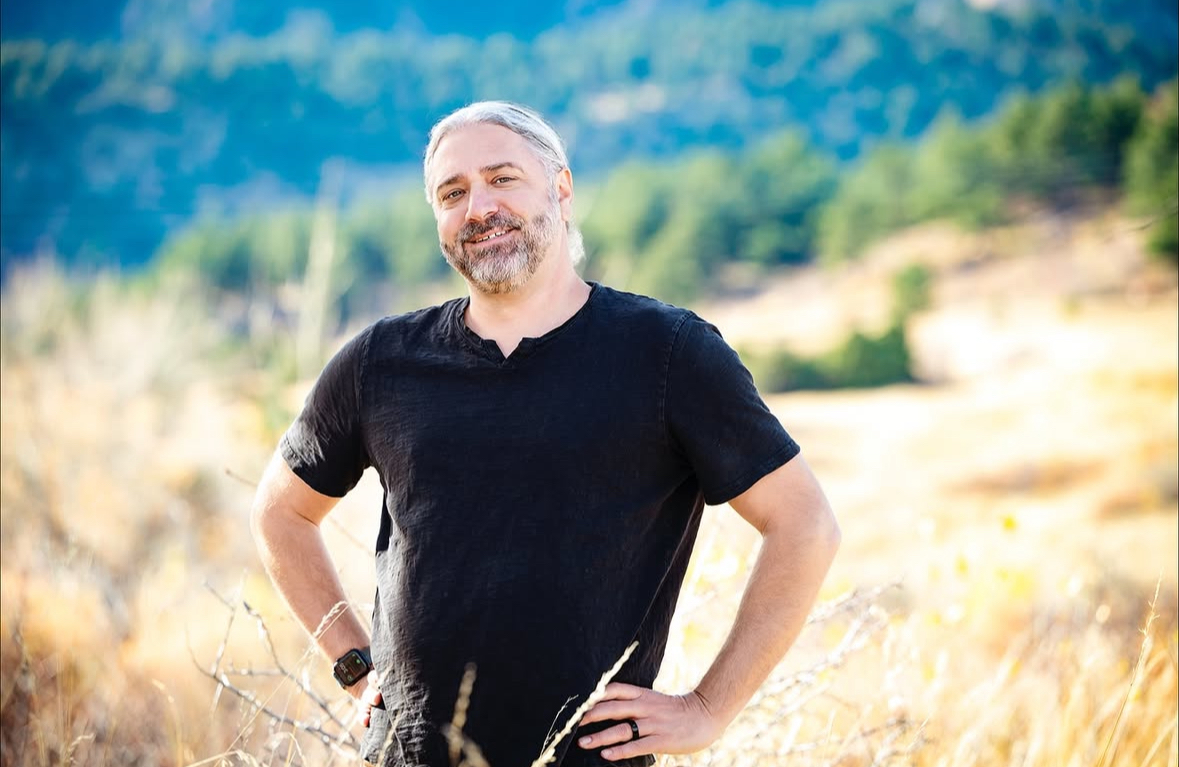
I am Jeremy Nickel, Colorado Licensed Natural Medicine Facilitator #54. I trained at the California Institute of Integral Studies in their Psychedelic-Assisted Therapies and Research program, and I have been practicing meditation for about thirty years, which is less impressive than it sounds and mostly means I have spent a long time learning to sit still while something uncomfortable happens.
Before this I spent roughly twenty years in chaplaincy and congregational work. A lot of that was bedside. I have been in rooms with people who were dying, with families in the worst hour of their lives, and with people frightened in ways that had no solution available. Nothing I did in those rooms fixed anything. What I learned instead was how to stay, how to be useful without needing to be the center of the moment, and how to tell the difference between someone who needs to be talked to and someone who needs to be left alone with company nearby. That is the skill I brought into this work, and it is the one that matters on a medicine day.
Whether this is right for you at all
Screening here is real, and it happens before anything is scheduled or paid for beyond nothing at all. We go through your medical history, your mental health history, and every medication you take, including the ones you would rather not mention. Where it is indicated I will ask for written clearance from your prescriber. A personal or close family history of psychosis or bipolar I, an acute suicidal crisis, certain cardiac conditions, pregnancy, and several common medications are all reasons this may not be appropriate, either at all or right now.
I tell people no. Not often, but regularly enough that you should know it is a real possibility when we talk. Sometimes the answer is that the timing is wrong and six months of stability would change my assessment. Sometimes the answer is that what you are describing calls for a psychiatrist rather than a facilitator. I would rather lose the work than take money from someone I do not believe should be doing this, and I would rather tell you that in a free conversation now than discover it on a morning when you have already flown here.
The specifics, including contraindicated medications and what happens if a session becomes difficult, are on the safety and screening page.
What it costs
The Individual Journey is $3,200 and the Couples Journey is $4,200. Both prices exclude the cost of the medicine itself, which is set by the licensed healing center rather than by me and generally runs about $50 to $200 per person depending on dosage and the center. For couples that medicine cost applies to both participants. Each journey includes two one-hour preparation sessions, the medicine day, and two one-hour integration sessions. Additional preparation or integration hours are $150 each if you want more, and plenty of people do. Retreats and custom programs are priced by conversation, because they vary too much to list.
There is no surcharge for working in Boulder rather than anywhere else, and nothing is charged before we have talked. You will know the full cost, including the medicine, before you commit to anything. The complete breakdown lives on the offerings page.
Questions people ask about doing this in Boulder
If you are trying to decide
Most people who reach out to me are not sure yet, and that is the right state to be in when we first talk. The initial conversation is complimentary and runs about thirty minutes. You can ask me anything, including the questions that feel too basic to ask, and I will tell you honestly what I think, which sometimes means telling you that this is not the right work, or not the right moment, or that someone else is a better fit for what you are carrying.
If it does turn out to be right, you will have talked with the person who will be in the room with you, before you spend anything.